
Falling in love with winter, solstice musings, and resting through winter
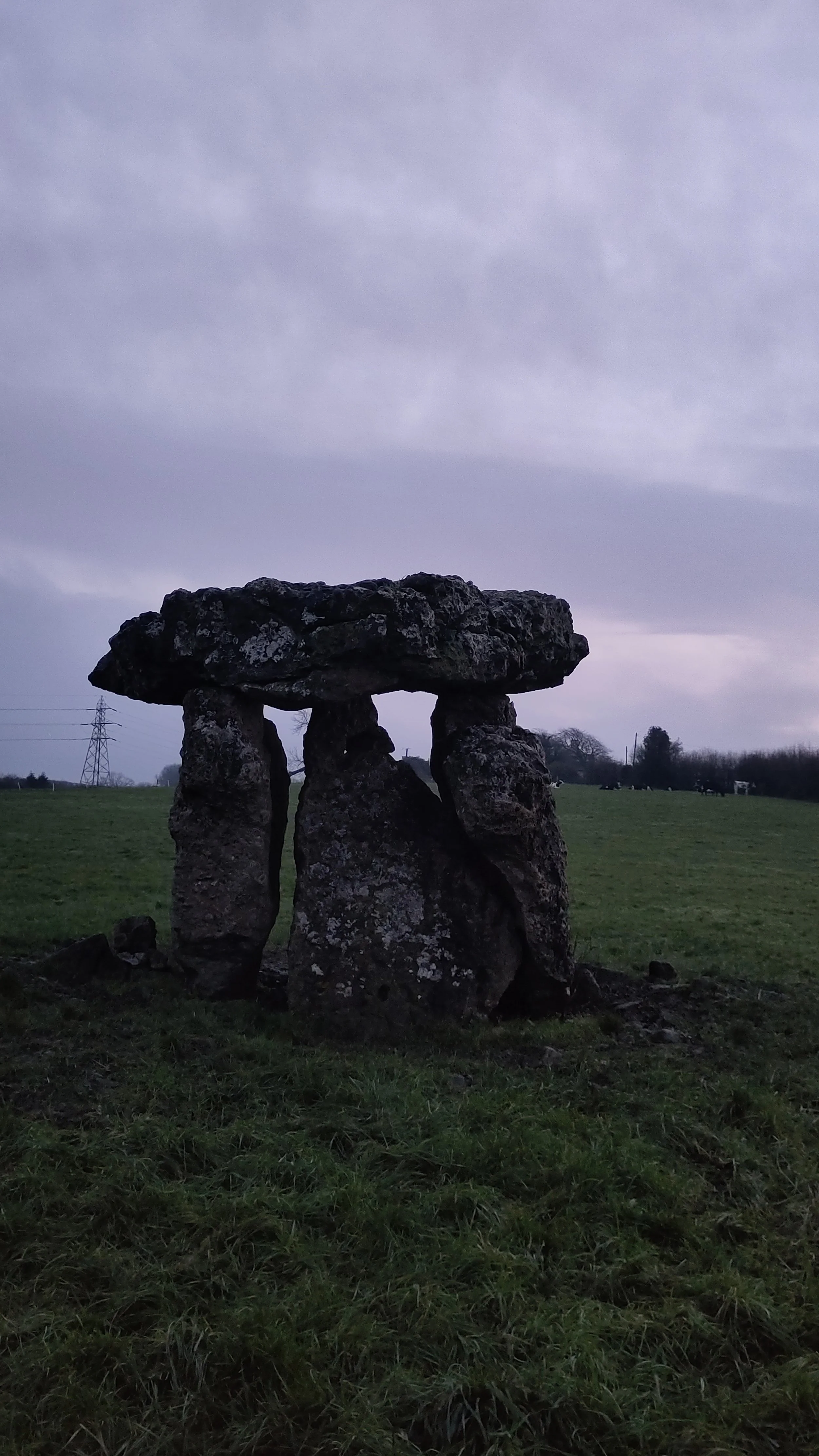
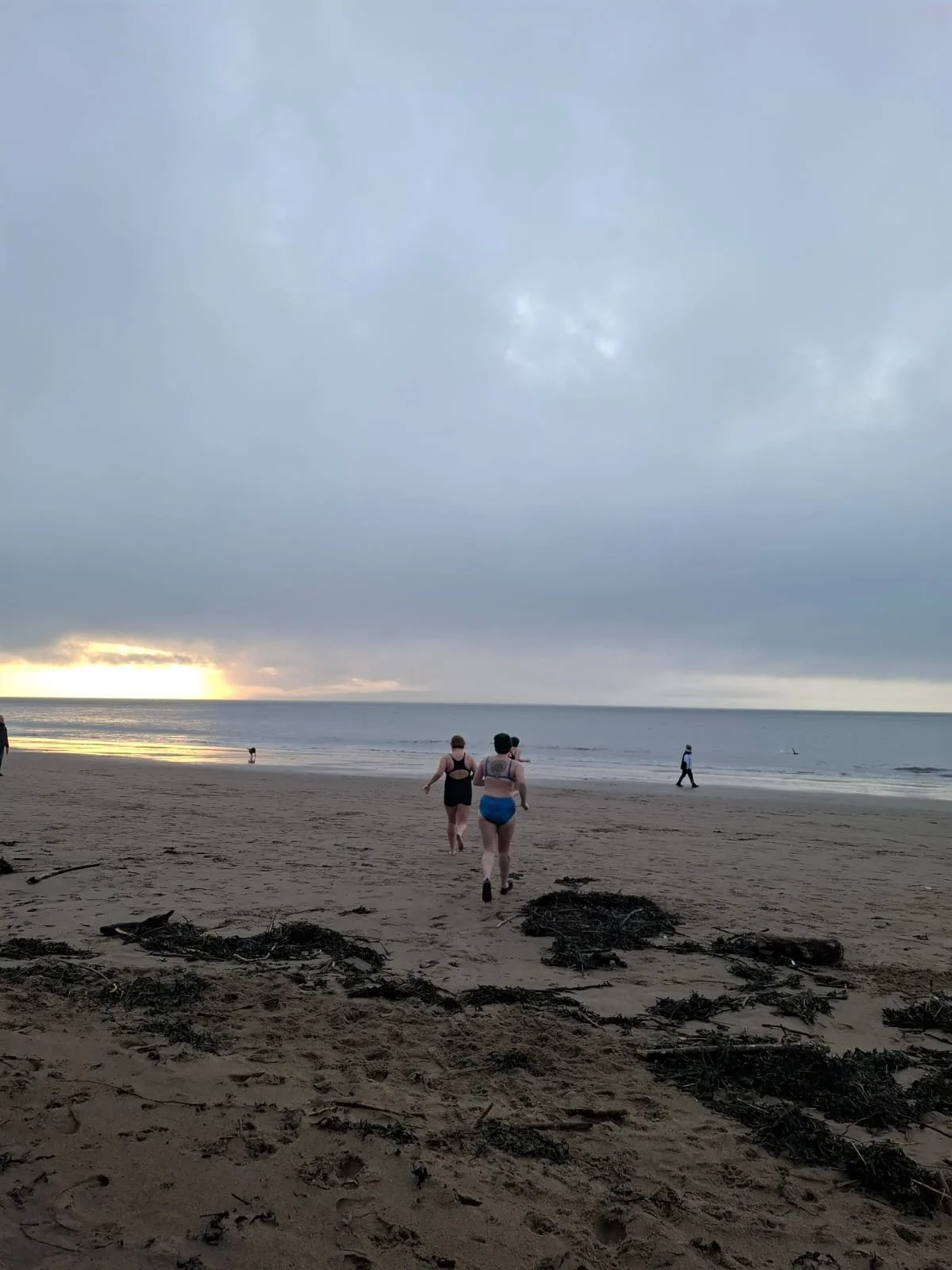
St Lythan’s burial chamber (left), where friends and I saw the solstice sunrise before running into the sea (right)
After years of dreading, hating this time of year I am finally falling in love with winter. This is something I thought I’d never say.
Years of tiredness, misery, feeling like I was doing something wrong, I was wrong, at this time of year and I’m now relishing in the slow, quiet that this season brings.
How? Two main things: I have time and space to take the rest that I need with jobs that allow me to take things slower. And my work to release the shame I have around resting, around needing more rest and slowness and downtime than most around me is coming to fruition. I am feeling the shame and guilt I have worked for years to unlearn actually being unlearned, it’s not perfect but it is life changing.
I am still tired, exhausted even. I have less motivation to do things, I want to eat and sleep and my body is flaring and complaining more than it does in summer. But I am ok with all of this, I no longer label it as “wrong” that my body desires less this time of year. I am not forcing myself to be super productive and motivated and full of energy. I know that I am a natural being, an animal who simply needs more rest, time, space, in the darkness of the coldest months. I have spent a decade and a half battling against the dark but I am learning to embrace it.
It’s freeing, in a slow and soft way. I look back on my solo winter walks last year through thick muddy fields and quiet woodlands sprouting the occasional flush of cold damp loving fungi and the memories bring me so much joy. I am not waiting for spring to come, I am embracing the winter we have. I relish the peace and quiet, the sense that much of the natural world around us is slumbering this time of year. The low light glistening between the branches of trees, damp grey days with low clouds that hold me in my melancholy.
I am so grateful to not fight it anymore.
I wrote a piece for a workshop I did with Garddio yesterday reflecting on the winter solstice, on how our cousins of other species adapt to the winter, and prompt questions about what it would be like to live in a world where we are allowed to listen to our bodies and rest through the cold months. I invite you to take ten minutes to listen and rest, or to read the text below it.
Transcript:
Today is the start of astronomical winter, the shortest day of the year with just 7 hours and 54 minutes of sunlight for us here in cardiff.
At 15:03pm the north pole hit it's furthest tilt from the sun for the year and from here the days get slowly lighter, though the depths of the season of winter are not yet fully upon us.
But those of us in the UK probably don't need a calendar to tell us that, signs of winter are all around us and many of us will be different external cues that tell us "ah yes winter is here" whether you love it or dread it.
The trees are an obvious choice.
Trees need light for survival, the green of their leaves is cholropyll, an essential component in photosynthesis. The magic process of turning sunlight to sugar, yes I do think trees are magicians, creating energy from light.
But producing and keeping leaves takes energy, and in the winter there is much less light and much more cold.
The encroaching darkness signals to them that it's time to let go of the heaviness of their leaves, and conserve energy and water, until the days are longer again into spring. They enter endodormancy.
As light levels and temperatures drop the flow of a hormone called auxin to the leaves slows while the flow of ethene rises. These impact how different cells in leaf behave. A tear, and a leaf drops, again and again until all are gone.
The dormancy isn't a full shut down, there are still functions happening. Conversations even.
But trees have evolved over a mullenia to drop their leaves, to pause growth, and preserve energy for their survival. And they're not the only ones.
I'm sure many of us are familiar with hibernation. With bears fattening up through late summer and autumn before heading to their den for a winter slumber. In the UK we have hedgehogs leaf piles, door mice in woven nests. Do they dream of the spring flowers that await them when they emerge? Of the long warm summer days past the frost and darkness?
But mammals and trees are not the only adapters to the cold. Many bugs have their own version of hibernation.
Take the ladybugs who enter what is called diapause. A process where they drop their metabolic rate by up to 50% to conserve energy while food sources are scarce and temperatures are low. They build up fat reserves before this slowing to survive long months without food, and some even have antifreeze substances in their blood.
They'll find cracks in rocks or hollow tree to see out the winter, and some find extra warm spots in our homes.
Some species even gather in large groups (aggregations) for warmth and protection in sheltered spots. When individuals have found a good spot they'll send out a chemical signal to others as if to say "I've got a good one! Let's spend the winter here". And they hunker down in a big cluster. A sort of bug snuggle puddle. Snug as a bug in a rug? Or snug as a group of ladybugs in a log?
In contrast our human society trundles on. In some ways it seems to get faster. Our workdays stay the same, our productivity is not expected to waver, there's no time taken to rest more. Then there's a big holiday in the darkest part of the year that we spend months preparing for in a way that I'm not sure feels nourishing or restful.
Then it gets to January 1st, "new year new me" were excepted to transform out lives, hit the gym, be active different people while the natural world around us still largely slumbers on.
Contrary to much of what capitalism and colonialism has taught us, humans are natural creatures, animals even. We have evolved with the seasons and surely have our own adaptations?
You may have heard of seasonal effective disorder, it's categorised as a mental health issue. Characterised by low mood, fatigue, increased appetite and craving of high calorie food, and difficult concentrating and socialising.
But don't many of these feel like an adaptation to winter? It is cold and dark so is it any wonder that our bodies want to sleep more, eat more, do less.
Yes we are told that we must fix this! There's something wrong with us! Stay a productive member of society!! Do light light therapy and daily walks and CBT and take antidepressants!
Now I'm not saying dont do these things. As a suffered of SADs myself I love a sunny winter walk, I try and get myself outside every day and will always support people having access to therapy and antidepressants. But what if we had access to rest, real rest over winter? Would that change things?
Who would we be as individuals if instead of being pathologised for our bodies reactions to winter we could instead just listen to them and rest?
What would society look like if we followed the rhythms of the seasons instead of being expected to go 100% all year round? How would the way we interact with ourselves, our communities change if we listened to the natural world?
To take inspiration from the tees.What would it be like to drop heaviness over the winter season, to find ways to slow and preserve energy, what would your endodormancy look like?
How would it feel to gather in groups like lady bugs and snuggle the winter away in a safe warm spot emerging collectively when the days are longer and warmer?
What would it be like to shed the shame of needing to rest? Who would we become? What would we build instead?
Happy Solstice, the light now slowly returns, you can wake up slowly with it. There’s no rush.